Stepping Mindfully toward Healing the Earth

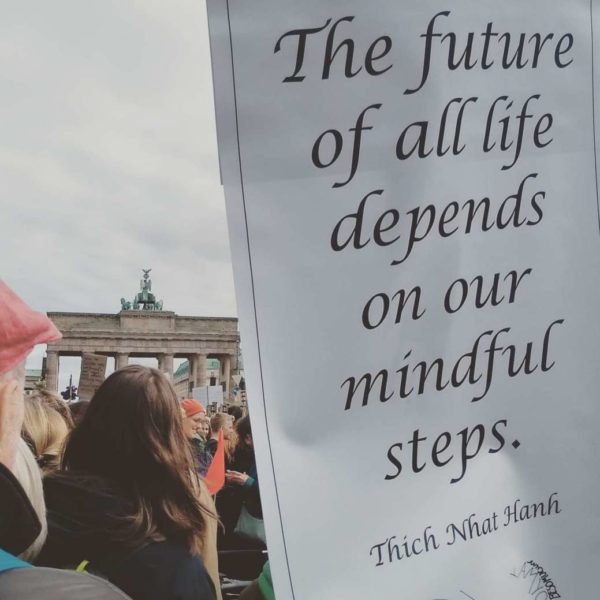
Fridays for Future demonstration, Berlin, Sept. 20, 2019

As our small group of Sangha members practices walking meditation to the site of the demonstration from nearby Tiergarten, I am thinking about the profound shift that is asking to manifest inside many of us. Sustainability and climate rescue aren’t primarily technological or even political challenges in the conventional sense. They are, rather, a psychological-spiritual door through which we are invited to walk as we deepen our understanding of ourselves, our true needs, and our inter-connectedness with all beings.

In response to this invitation, I aspire to walk purposefully and to look deeply to recognize the habitual, usually unconscious mental processes that govern so many of my actions. Shining the light of attention on these processes softens their grip on me and enables me to act more like a free person in accordance with a deeper, holistic knowing.

Walking mindfully alongside the others in my group, I experience peace and trust well up followed by a feeling of unconditional joy. As we harmonize our steps with our breath and move together like a river, I feel myself expand to embrace more and more of what is, the whole of reality exactly as it presents itself at this very moment. Stresses and fears that have lodged themselves in my mind-heart-body are beginning to dissolve with each conscious step, making room for gratitude, love and creativity.

The walking meditation reveals to me a deeper and experiential understanding of my true nature and my true needs. Materially these needs amount to a fraction of what they appear to be when viewed through in a less conscious frame of mind. Walking mindfully, my consciousness is undergoing a shift from experiencing life through “having” and “doing” to experiencing it through “being.” Along with this shift, common perceptions of scarcity and threat give way to perceptions of abundance, safety and potential.

The state of the earth’s ecosystem is a reflection of the state of our inner ecosystem, which for most of us is a more or less chaotic battleground of ever-changing views, allegiances, impulses, desires and judgments. This leaves us feeling very dissatisfied and we keep running after more stuff, money, experiences, status and power in hopes of overcoming this feeling. Bringing peace and healing to our inner world is key to achieving peace and healing for the outer.

I am encouraged by the degree to which I have observed my own consciousness shift in the years since I started meditating and following a spiritual path. Though I clearly have a long ways to go, this small progress on my part is evidence to me that caring for and healing our inner ecosystem are within reach. Though the shift has been mostly incremental and relatively slow for me, I believe that it can also occur in spurts if the circumstances are right.

I am hopeful that circumstances will soon be right for a rapid global shift in consciousness and on this Friday I dedicate my purposeful steps to that end.

May all beings be happy and free.
Mindful Gardening Workshops

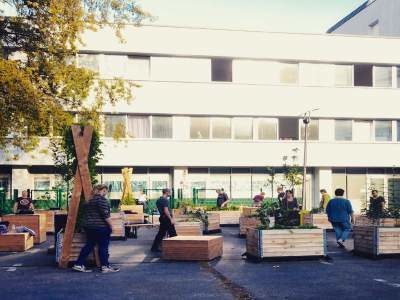
As part of a new urban garden developed by PrinzessinnengartenBau at the Urania in Berlin, I recently offered a workshop in Mindful Gardening. For two hours some 20 participants meditated and mindfully cared for the garden while practicing such mental attitudes as non-judging, beginner’s mind, non-striving and, gratitude and patience. We spent about two hours together, much of the time in silence. We practiced returning our attention to our own body and connecting with the plants and animals in the garden. We felt welcomed by Mother Nature and generously supported by her solidity. Some participants expressed surprise and gratitude for the strong sense of community and bonding that is possible among a group of strangers after only a short practice session. On behalf of the Urania and all workshop participants I would like to say “Thank You” for making this workshop such a moving experience.

I will lead another mindful gardening workshop on Wednesday, Sept. 25, at 2PM im Parkplatzgarten am Gropius Bau. More details and the location are available here. The workshop will be conducted in German. Participation is free and everyone is welcome. No meditation experience is necessary.

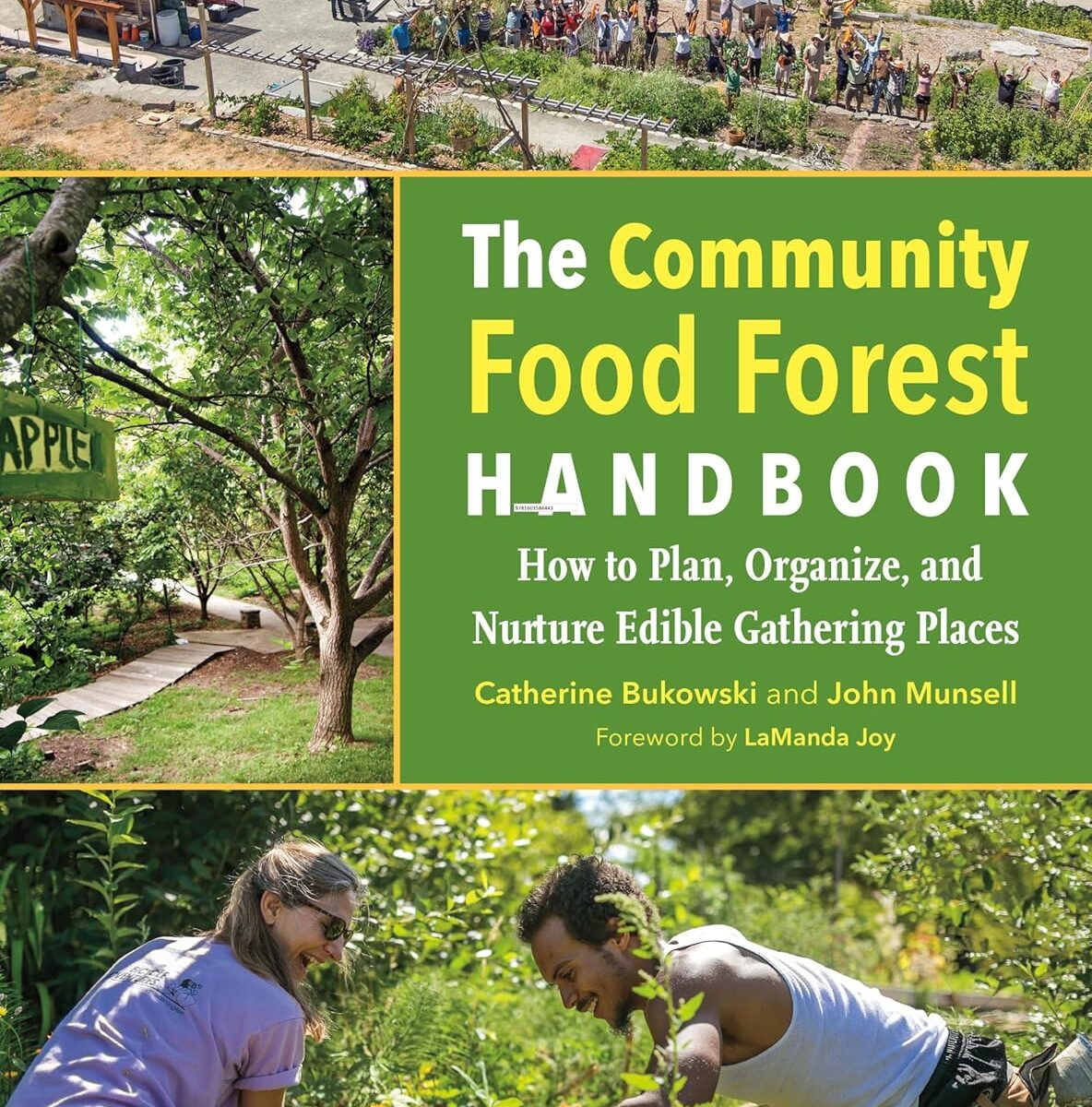
Cultivate KC’s Food Forest Featured in New Book on Community Food Forests

I’m thrilled to learn that the Cultivate KC Food Forest is featured in a new book on community food forests. While I haven’t been able to get my hands on the book yet, I have read excerpts and I’m very proud to see this project, which is so dear to my heart, featured alongside a number of other great food forests around the U.S. Among the contributions of our project, as stated in the book, is that it has facilitated a larger shift in understanding sustainability, with renewed emphasis on the well-being of the humans producing our food. I couldn’t be happier.

I began development of the food forest as a Together Green Fellow in 2010 and it has been a privilege to see this project grow and thrive with the help of many others over the past nine years. To me, the food forest has been a precious teacher of forest design and deep ecology, of courage, humility and patience, of mindfulness and, above all, of love (for trees, life and all beings).

The Community Food Forest Handbook is written by Catherine Bukowski and John Munsell and published by Chelsea Green Publishing. Check it out!

Don’t Just Do Something…

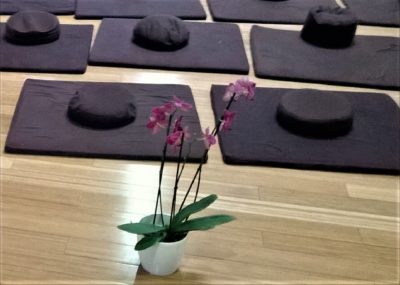
“Don’t just do something, sit there,” people accustomed to meditation sometimes quip when confronted with a difficult situation. It means that instead of kicking into action at the first thought of trouble, we consider first taking a moment to sit and meditate. But isn’t that giving the situation time to deteriorate? For most problems, probably not.

By taking just 10 minutes in meditation you can significantly improve your chance of solving the problem by

  • not being completely taken over by your mind-made interpretation and allowing for alternative perspectives,
  • grounding yourself and allowing the anxiety of the moment to pass through,
  • connecting to that which is working well at the time
  • generating a feeling of joy,
  • bringing to mind your deeply-held values (thus calibrating yourself to act in accordance with them), and
  • preparing the stage for joyful, courageous and effective action to address the situation.

Remember that we are much better problem solvers when we are happy, optimistic and at ease. So next time you feel the urge to rush and do, consider heading for the cushion instead.

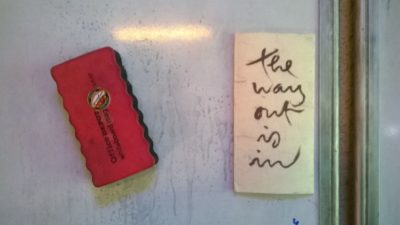
The Way Out is In

We say we want to live in a world of peace, kindness, love and sustainability. Gandhi reminds us to “be the change we want to see,” and his words intuitively make sense. But how can we be peace, kindness, love and sustainability? In my experience it helps to periodically withdraw from the noise of our technological civilization and to observe in quiet meditation my inner tension, anger, fear and lack of peace.

When I have gotten in touch with my inner state of being, I have reason to celebrate, even if I have observed a lot of pain. In meditation, I can hold and transform anger, sadness and fear without distracting myself with unneccessary and often unsustainable consumption, work or scheming. I can just be with the pain and know that it is not mine alone but that it has been transmitted to me for many generations. Gradually I become less afraid to touch my pain and thereby transform it, heal it. It can feel like a true liberation, a liberation to finally give myself the love and care I deserve and to love others as if for the first time.

You say you long to step into a world of peace, kindness, love and sustainability? The way out is in.