
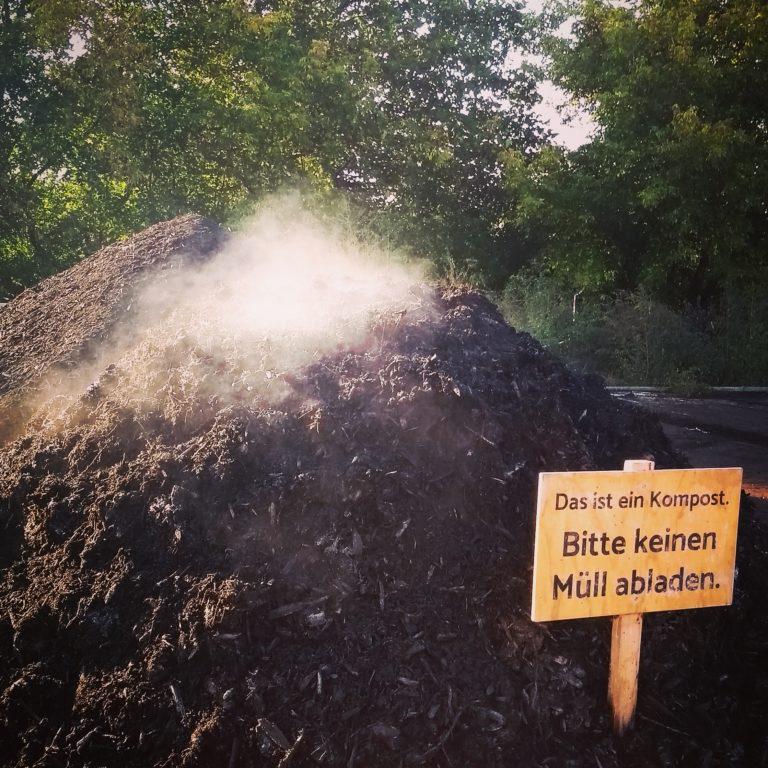
For a year and a half now we have been operating an urban composting project in Berlin Hellersdorf. We get weekly deliveries of rotten veggies from a food bank and mix them with wood chips from a landscaping company. Piles get turned regularly and soon they start to heat up, reaching up to 80 degrees Celsius in some cases. After only a few weeks, what started out as a rotten, smelly mess takes on the feel and aroma of the earthy, rich soil amendment we are hoping to create: compost.
Composting is nature’s way of making use of everything. Nothing gets wasted. Every piece of decaying vegetation and many other “wastes” are welcome in the compost pile. With time these unwanted ingredients are turned into a fresh-smelling nutritious soil amendment, providing the nourishment and fertility for next year’s garden vegetables.
Can we learn to treat the unwanted circumstances, thoughts and emotions we face in our lives as fertilizer for a rich harvest in the next season? Through mindfulness practice we can indeed safely compost these difficulties and transform them into treasures of insight, compassion, happiness and freedom.
These days many city dwellers rarely get to witness the natural decomposition of dead plants or animals. We have sanitized our modern cities to the point where cycles of birth and death have become hidden from us. In many places even leaves falling from trees in parks and yards are swept up and disposed of instead of being left to rot naturally and thereby fertilize the soil right where they landed.
Many of us have adopted a similar sanitation strategy for our minds and hearts. We try to sweep from our inner landscape all difficult thoughts and emotions, such as pain, worry, anger, loneliness and despair. We attempt to dispose of these thoughts and emotions in endless acts of consumption, work, talking, browsing the web or social media, and other activities meant to keep us from feeling them. However, just as raking up leaves deprives a tree of next year’s fertilizer, this approach prevents our difficult thoughts and emotions from being turned into valuable compost.
Needless to say, I think this sanitation strategy isn’t very effective. It requires almost ’round-the-clock inputs in energy, money, time and attention, and, more importantly, it also keeps us from experiencing the healthy fruits of a well-fertilized soil in our hearts and minds.
As an alternative strategy, I suggest meditating on difficult thoughts and emotions to transform them. Through meditation we can see more clearly the ever-changing nature of our outer and inner worlds. We can see that what we considered “bad” may appear as an important step toward something “good.” By courageously looking at ourselves in meditation, we can also see that our own pain is the door to understanding the pain of others, to greater compassion and love for all people.
So, think of meditation and mindfulness practice as a kind of composting: We lovingly gather the ingredients, carefully mix the pile, turn it frequently (with our mind’s attention) until it warms up, and, when finished, spread it onto our fields for a rich and joyful harvest.
Happy composting!