Before Gamelanjourney there was the Urban Mindfulness Lab

Below is the original “About” section of urbanmindfulnesslab.com:

“Mindfulness is the energy of being aware and awake to the present moment. It is the continuous practice of touching life deeply in every moment of daily life. To be mindful is to be truly alive, present and at one with those around you and with what you are doing.”
Thich Nhat Hanh

The Urban Mindfulness Lab (UML) explores the potential of bringing mindfulness practice to sustainable urban community development. UML seeks to promote the transition from an ego-centric to an eco-centric city.

UML is presently taking the form of an occasional blog chronicling experiences in mindful urban living.

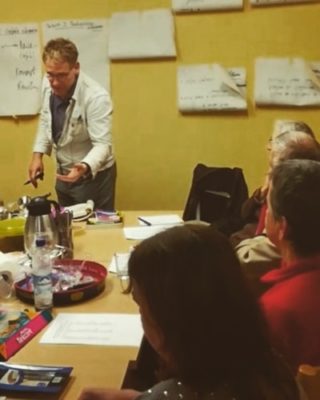
UML was created in 2018 by Daniel Dermitzel, an educator, community builder and organic farmer with a lifelong interest in peace-making and sustainability. Daniel has lived half of his life in Germany and the other in the USA, becoming familiar with urban challenges in each. He holds a bachelors degree in journalism and a graduate degree in urban planning from the University of California, Los Angeles. Daniel has started and managed several organic farms and co-founded a non-profit urban agriculture organization. He has also taught sustainable planning and design at the University of Missouri.

Daniel is a student of mindfulness under Vietnamese Zen Master Thich Nhat Hanh in whose monastery, Plum Village, he has lived and worked for two years. He is an ordained member of Thich Nhat Hanh’s Order of Interbeing. Daniel’s goal is to encourage change at the heart level, to facilitate conversations that build bridges and to help bring understanding to a world of conflict. More information about Daniel is at www.danieldermitzel.com.

Walking in Another’s Footsteps

If you would like, please enjoy this short audio clip about an experience I had walking in the snow yesterday.

Or if you prefer, you may read it here:

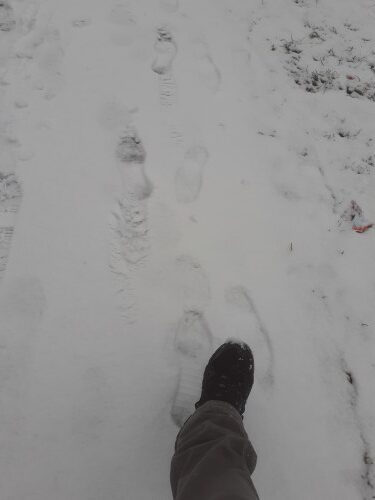
Yesterday we had our first snow of the winter here in Berlin. And because it was Sunday many people headed outside to enjoy a good time, to go walking, jogging, even building snow figures in a park nearby. I also went to the park and decided to enjoy the moment by practicing walking meditation, taking very small, slow steps, trying to fully arrive with my whole body and mind each time I placed my foot on the earth.

It was about midday and many people had already passed through the park and the open areas were crisscrossed by their tracks in the fresh snow.

After practicing walking meditation for some time, I noticed that I was about to step exactly into an existing footprint in front of me. I began to change my pace and started to follow in the steps appearing before me one by one. The distance between them was larger than I could comfortably stride, perhaps because the person had been hurrying or maybe he or she was quite tall.

I kept following the footprints without losing my mindful focus on each step and I had an experience of connecting with that person who had walked here before me. I kept breathing mindfully and with each deliberate step, I invited this stranger a little bit closer to me until it seemed we were walking and breathing as one.

This was a lovely experience, even though as I look back, it could have felt a bit uncomfortable to invite a stranger to be so close. But it felt good and joyful, like meeting an old friend.

I wondered how this person was doing as he or she walked past here. What was the person thinking, feeling? Not knowing the answer, I began to get in touch with a range of human emotions and mind states: joy, excitement, anticipation, anger, frustration, anxiety, emotions and states that we are all familiar with, that bind us together. And I began to sense a strong energy of compassion and affection flowing through my body.

Retracing each step was like saying “hi” to that person, and “how are you” and “I’m here”, “I’m listening to you”, “feeling you”, “you are familiar and I recognize you“, “you are a brother, a sister of mine.” Through a simple practice of walking mindfully in somebody’s footprints, I was getting to meet this person as well as myself in a quite deep, spiritual, heartfelt way. What would have happened if by following these footsteps further I had eventually caught up with the person printing them onto the snow? Though I couldn’t be sure, I imagined I would wish to bow to that person, look him or her in the eyes and express my gratitude to them for letting me walk in their tracks for a bit, for leaving me this opening into their life, their being. And to say to them “how are you?”, “I see you” and “I’m listening.”
Present Moment, Wonderful Moment

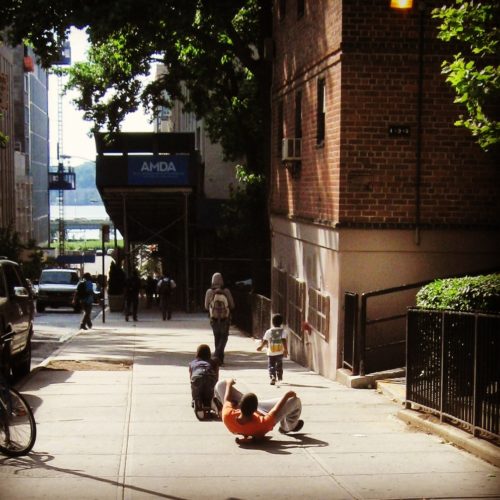
A child, a skateboard and a slope are all it takes to enjoy this wonderful moment in the city. As the world is witnessing expressions of anger, frustration and sadness following the killing of George Floyd in Minneapolis, may this picture also serve as a reminder that built into the fabric of our cities are institutional racism and white supremacy, making it so much harder for residents of color to pause, let their guard down and simply experience the bliss of being. May we find the wisdom and resolve to dismantle racism and white supremacy. Photo taken in 2012 in Manhattan.

Pause in the Garden

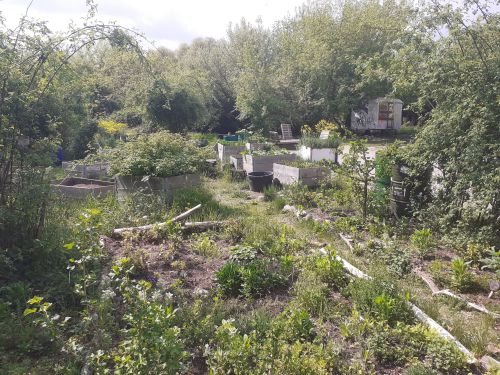
On May 2, 2020, during the continuing partial lock-down due to Corona virus, our garden offered a beautiful opportunity to stop, return to our body and greet Mother Earth. Click on the short video below to pause, enjoy the sound of the birds, and listen to the bell for a few seconds. Enjoy.

Mother Earth is “how you eat the carrot… how you shut the door” — Buddhist Monastics on Caring for the Planet

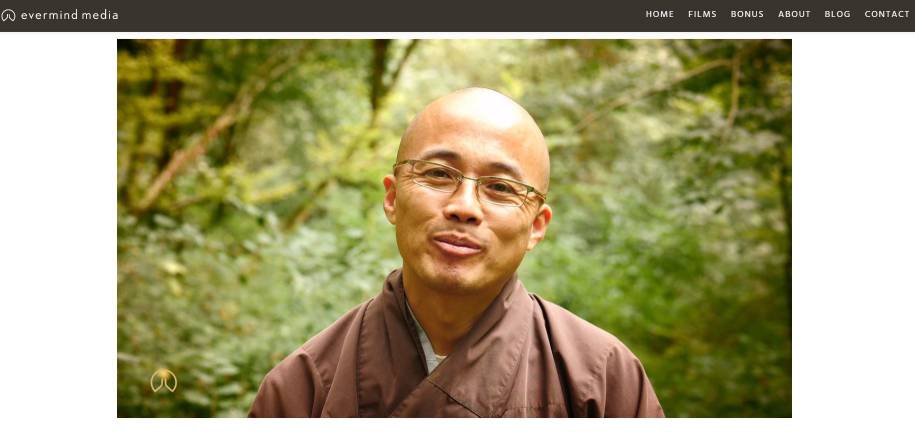
Recently I visited Evermind Media, a website showcasing the collaborative efforts of Dutch filmmaker Wouter Verhoeven and the Plum Village Community founded by Thich Nhat Hanh in Southern France. Among the many films and stories posted to Evermind is a series of interviews with monks and a nun from Plum Village on the topic of caring for Mother Earth.

“What is the root cause of climate change?” “What can young people of today do?” “Do you have one word of love for Mother Earth?” These are some of the questions posed to the monastics in beautifully filmed, slowly-paced interviews which, as I think about it, really form a series of precious dharma talks.

We are reminded that the earth and the environment are not something outside of us that “need saving,” but are inseparable from us, and that transforming the suffering of the planet starts with transforming the suffering inside ourselves. This means that we become aware of how we are always running, driven by strong emotions, always looking for something to consume to give us a moment of peace, only to find ourselves running again a short while later.

People like myself, who live in large, fast-paced cities, may find it difficult to step out of the rush that’s happening around us. In fact, we may think the only way to address climate change effectively, is by adding more action-steps to the to-do list, by doubling our efforts and continually raising expectations of ourselves and others. In light of almost-daily news of an environmental crisis somewhere in the world, it makes a lot of sense to think this way.

Still, we may wish to pair our activism with a good dose of self-care, compassion and insight into “interbeing,” the inter-connectedness of all phenomena. Brother Phap Dung, a senior monk in Plum Village (who also supported us greatly in setting up the Plum Village Happy Farm), says in the interview that people should…

“…learn how to take care of their suffering, their despair, their sadness, their anger, their frustration. You are the Mother Earth. To take care of yourself is also to take care of Mother Earth. Mother Earth is not out there, as a tree in the environment. It is the carrot and how you eat the carrot. It is how you take care of your body, how you move, how you hold something with less tension, how you carry yourself, how you shut the door. Mother Earth is shutting the door. So, how you slam the door is exactly the kind of energy that is being done to the Mother Earth.”

Taking care of the earth then becomes a daily practice of taking care of ourselves emotionally and physically. It doesn’t have to wait until we attend a climate demonstration, vote in the next election, plant a vegetable garden or cycle to work instead of taking the car. We can contribute to healing the earth at any moment just by stopping, taking a deep breath and lovingly embracing all our worries and pains. And when we do so, other needed actions will follow more naturally and easily.

Br. Phap Dung also reminds us that Mother Earth is not only suffering. “Mother Earth is not just crying and in pain,” he says, “Mother Earth is also telling us, ‘wow, you are alive.’ Every day the sun rises, have you seen it lately? Mother Earth is in the child smiling, do you have time to play with the child? […] You can have suffering [and] pain, but you can also have tears of joy, laughter of wonder.”

To allow ourselves to cry tears of joy and to laugh with wonder at the gifts of the present moment is to support the whole planet right away. And it is possible to practice this form of healing at least several times a day.

This short post can hardly do justice to the depth of the reflections contained in this and the other interviews. For many more beautiful, encouraging and inspiring words on this subject, head over to Evermind Media and click on the “Bonus” section. A bow of gratitude to Wouter and the monastics for making these videos available to us at a time when so many are trying to figure out how to respond to the climate crisis.